

Bluetooth Helmets in 2026: 13 Reasons They're No Longer Optional
Why Bluetooth Helmets Are Necessary in 2026 ?
Motorcycling in India has changed. Traffic is denser, commutes are longer, delivery riders are living on two wheels, and every rider now carries a smartphone that they need mid-ride — for navigation, for calls, for music. A plain helmet still protects your head, but it no longer matches how people actually ride.
That gap is exactly why Bluetooth helmets have moved from "nice-to-have gadget" to "everyday riding essential" — and our own research backs this up.
Earlier this year, the Headfox Research Team ran a nationwide study on Bluetooth helmet usage, surveying over 1,000 verified riders across 23 Indian cities, alongside 850+ product reviews and 1,200+ support conversations. The result was one of the most detailed pictures yet of how Indian riders actually use — and depend on — connected helmets. Here's what that data tells us about 2026, and why a Bluetooth helmet isn't optional anymore.
1. Riders Are Already Dependent on Navigation Mid-Ride
Daily commutes, highway touring, and delivery riding all have one thing in common: riders are constantly checking directions. Navigation dependency was one of the most consistent behaviours we tracked across every rider category — from daily office commuters to long-distance touring riders.
Without built-in audio navigation, that means glancing at a phone mounted on the handlebar, which is a well-known distraction risk. A Bluetooth helmet turns spoken turn-by-turn directions into something you hear, not something you look at. In 2026's traffic conditions, that's not a convenience — it's a safety feature.
2. Riders Want to Stay Reachable Without Stopping
Our data showed heavy usage across incoming calls, outgoing calls, and intercom communication — especially among daily commuters and group riders. People aren't riding to disconnect from their phones anymore; they're riding with their phones as part of the journey.
Delivery riders depend on calls to confirm addresses. Touring riders use intercoms to stay in sync with their group. Commuters take quick calls without breaking their ride. A Bluetooth helmet like Headfox's range lets riders do all of this hands-free, keeping both hands on the handlebar where they belong.
3. Battery Backup and Connection Stability Are Now Deal-Breakers
Across the 22 Bluetooth-specific data points we studied — pairing success rate, auto-reconnect, connection stability, audio latency, and more — one theme stood out: riders have very little patience for unreliable tech. Long battery backup, consistent auto-reconnect, and stable Bluetooth range came up repeatedly as top priorities.
This is exactly why Headfox helmets are engineered around dependable Bluetooth performance and long battery life — because a smart helmet that drops calls or dies mid-tour isn't actually solving the problem it's meant to solve.
4. Comfort Now Has to Include Electronics, Not Just Padding
Traditionally, helmet comfort meant padding, ventilation, and weight. Our research expanded that definition. Riders now factor in speaker placement, ear comfort, mic quality, and button usability with gloves on — alongside the classic comfort metrics like heat management and long-distance wear.
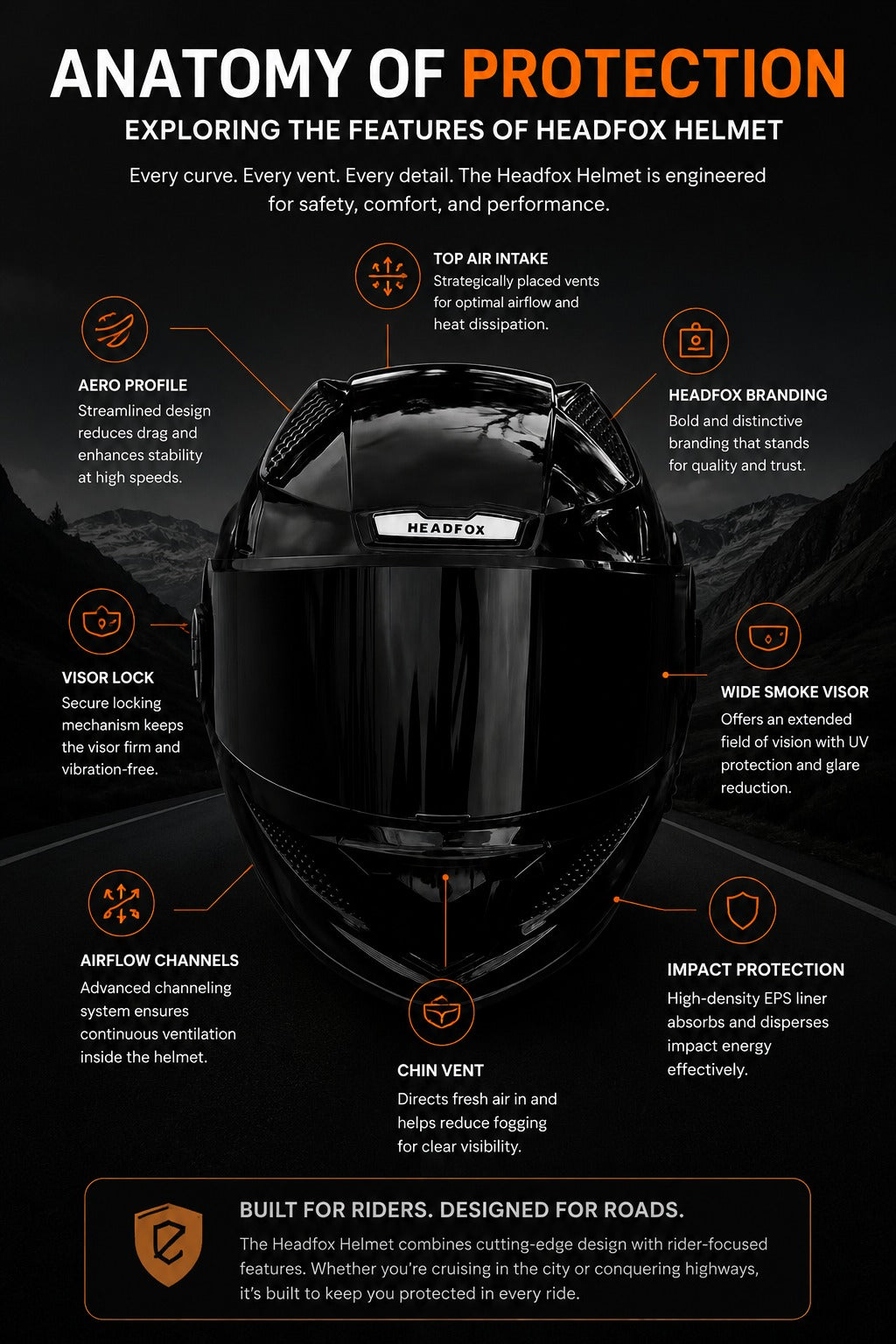
In other words, a Bluetooth helmet has to be comfortable as a helmet first, and seamless as a device second. Headfox helmets are built with this dual standard in mind — proper padding and ventilation, paired with intercom hardware that doesn't get in the way.
5. Safety Certification Awareness Is Rising
One of the clearer shifts we saw in buying behaviour: riders are actively checking for safety certification before purchase, not just Bluetooth features or price. This tells us 2026 riders aren't choosing style over safety, or tech over protection — they expect both in the same helmet.
That's the whole point of a genuine Bluetooth helmet brand: it should never be a trade-off. Certified protection first, smart features built on top of it.
6. Different Riders, Same Core Need
Our respondents spanned daily commuters (44%), weekend riders (21%), highway touring riders (18%), delivery riders (12%), and adventure riders (5%) — a real cross-section of how India rides. Despite very different riding patterns, the same needs kept surfacing across every group: reliable connectivity, long battery life, comfortable all-day wear, and durable build quality.
That consistency is the strongest signal of all. This isn't a niche preference of touring enthusiasts anymore — it's a shared expectation across the entire riding population.
7. Night Riding Is More Common — and More Dangerous — Than Riders Admit
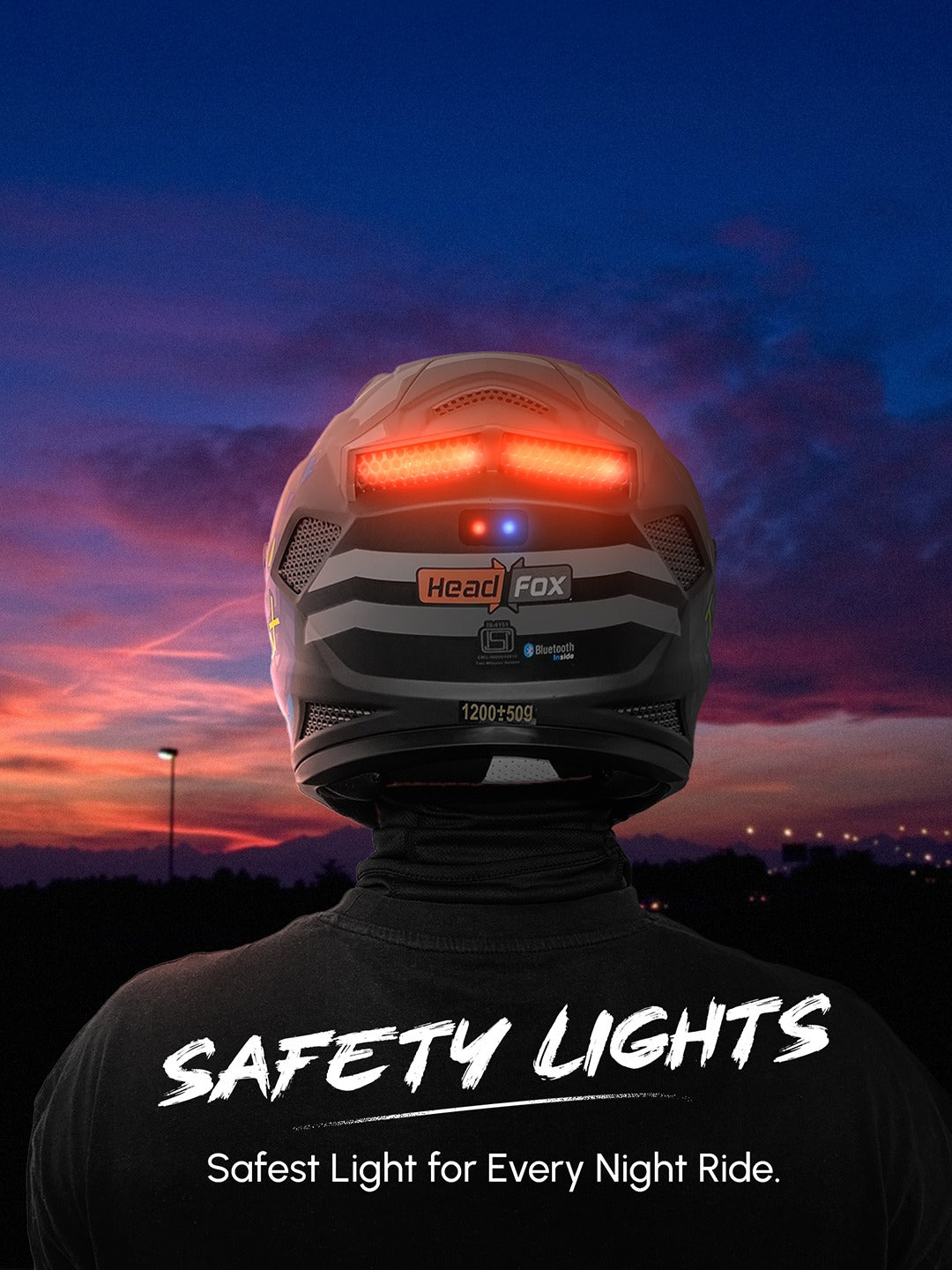
Night riding frequency was one of our tracked riding-behaviour metrics for a reason: a large share of commuters and delivery riders are on the road well after dark, whether it's a late shift home or a last-minute delivery drop. Visibility at night depends on more than headlights — it depends on the helmet itself.
LED visibility and night visibility both came up as helmet-performance priorities in our data. Reflective elements and visible LED indicators on a Bluetooth helmet aren't cosmetic — they're what makes a rider noticeable to traffic behind and around them after sunset.
8. Rain Riding Needs Tech That Doesn't Quit
Rain riding habits showed up clearly in our behavioural data, and rain performance and visor clarity showed up just as clearly on the performance side. Monsoon and unpredictable weather aren't occasional inconveniences for Indian riders — they're a recurring part of the riding calendar for months at a time.
A Bluetooth helmet has to keep working in these conditions: a fogged-up visor defeats the purpose of clear navigation cues, and a mic or speaker that fails in damp weather breaks the one feature riders are relying on most. Rain performance is a necessity metric, not a bonus one.
9. Group Rides and Touring Communities Run on Intercom
Weekend riders and highway touring riders don't ride in isolation — group rides and touring frequency were significant behavioural metrics in our study. Coordinating a group at speed, on unfamiliar highway stretches, with fuel stops and rest breaks to manage, is exactly the scenario Bluetooth intercom systems were built for.
Multi-device pairing matters here too: a rider needs their helmet to connect reliably not just to their own phone, but often to a riding partner's intercom as well, without dropouts mid-conversation.
10. Delivery Riders Have a Different, Higher-Stakes Use Case
Delivery riders made up 12% of our respondents, but their usage patterns stood out. High daily riding time, frequent fuel stops, constant navigation dependency, and near-continuous incoming calls define this segment. For a delivery rider, a Bluetooth helmet isn't about comfort or lifestyle — it's a working tool that directly affects their earnings and safety, hour after hour, every single day.
This is also where fast charging and battery backup satisfaction matter most: a helmet that needs a long recharge break in the middle of a shift isn't built for how delivery riders actually work.
11. Firmware Updates and Multi-Device Pairing Keep the Helmet Future-Proof
Firmware update frequency and multi-device pairing were both tracked as Bluetooth usage metrics, and for good reason — smartphones change every year, but a good helmet should last several years. Riders expect their Bluetooth helmet to keep pairing smoothly with new phones and intercom accessories long after the original purchase, not just on day one.
Regular firmware support is what separates a helmet that ages well from one that becomes obsolete the moment the rider upgrades their phone.
12. Wind Noise Reduction Is What Actually Makes Audio Usable
Wind noise impact was one of the most telling Bluetooth-usage metrics in the study, because it affects every other feature. Clear navigation instructions, call quality, and music streaming all depend on the helmet successfully cutting out wind noise at riding speed — otherwise, the "smart" features are just noise on top of more noise.
Good acoustic design and noise insulation aren't separate from the Bluetooth experience; they're what make the Bluetooth experience work at all on a highway.
13. Customer Support and Warranty Are Part of the Product
Warranty importance and dependable customer support both featured heavily in buying behaviour and post-purchase feedback. A Bluetooth helmet has more that can go wrong than a standard helmet — pairing issues, firmware glitches, charging port wear — and riders factor in how well a brand supports them after the sale, not just the spec sheet before it.
This is why service response and warranty terms are treated as core to the product experience, not an afterthought bolted onto marketing.
The Bottom Line
Bluetooth helmets are necessary in 2026 not because they're trendy, but because riding itself has changed. Riders are more connected, more mobile, and more reliant on real-time navigation and communication than ever before — and a plain helmet simply can't keep up with that.
Add to that the realities of night riding, monsoon conditions, group touring, delivery work under time pressure, and phones that change every year, and the case gets even stronger: today's rider needs a helmet that handles all of it at once, reliably, without asking them to compromise.
Based on what over 1,000 real riders told us, the helmets that will matter this year are the ones that combine dependable Bluetooth performance, long battery backup, all-day comfort, night visibility, weatherproof reliability, and certified safety — without trade-offs. That's the standard Headfox helmets are built to meet.
Ready to upgrade your ride? Explore the Headfox Bluetooth helmet range built around what real Indian riders actually need.


