

The New Age of Helmet Is Here
The New Age of Helmet Is Here
Let's be honest with each other for a second.
You've owned, what, three, four, five helmets in your riding life? And if you laid them all out on the floor right now — be honest again — how different are they, really? A shell. Some foam. A visor. Maybe better vents this time around. That's it. That's been the story for decades.
It's not that nobody tried. It's that nothing changed. Meanwhile everything else around us has quietly gone through a revolution. Your phone thinks for you now. Your car parks itself. AI is creeping into things we never expected it to touch. And your helmet? Still just... sitting there. Doing the one job it's always done, the same way it's always done it.
If you've ever felt a little bored clipping on the same kind of helmet you've worn since you first got on two wheels — you're not imagining it. Riders have been asking for more for a long time. Something that feels like it belongs to this decade, not the last three.
So here's the fun part: something finally showed up.
Say Hello to Tarmac, by Headfox
Headfox just dropped a helmet called Tarmac, and once you look at what's actually packed into it, "just another helmet" stops being an option.
Here's where it starts pulling away from everything else on the shelf.
It turns on when you do. No fumbling with a power button before every ride. Lock the chinstrap, and the helmet switches on by itself. Unlock it, and it switches off. Old helmets ask you to remember them. Tarmac just pays attention.
Built-in subwoofers, not an afterthought. A 40mm internal driver plus a 5W bass driver means your music actually has weight to it — not the thin, tinny sound you'd get from clip-on speakers jammed into foam padding.
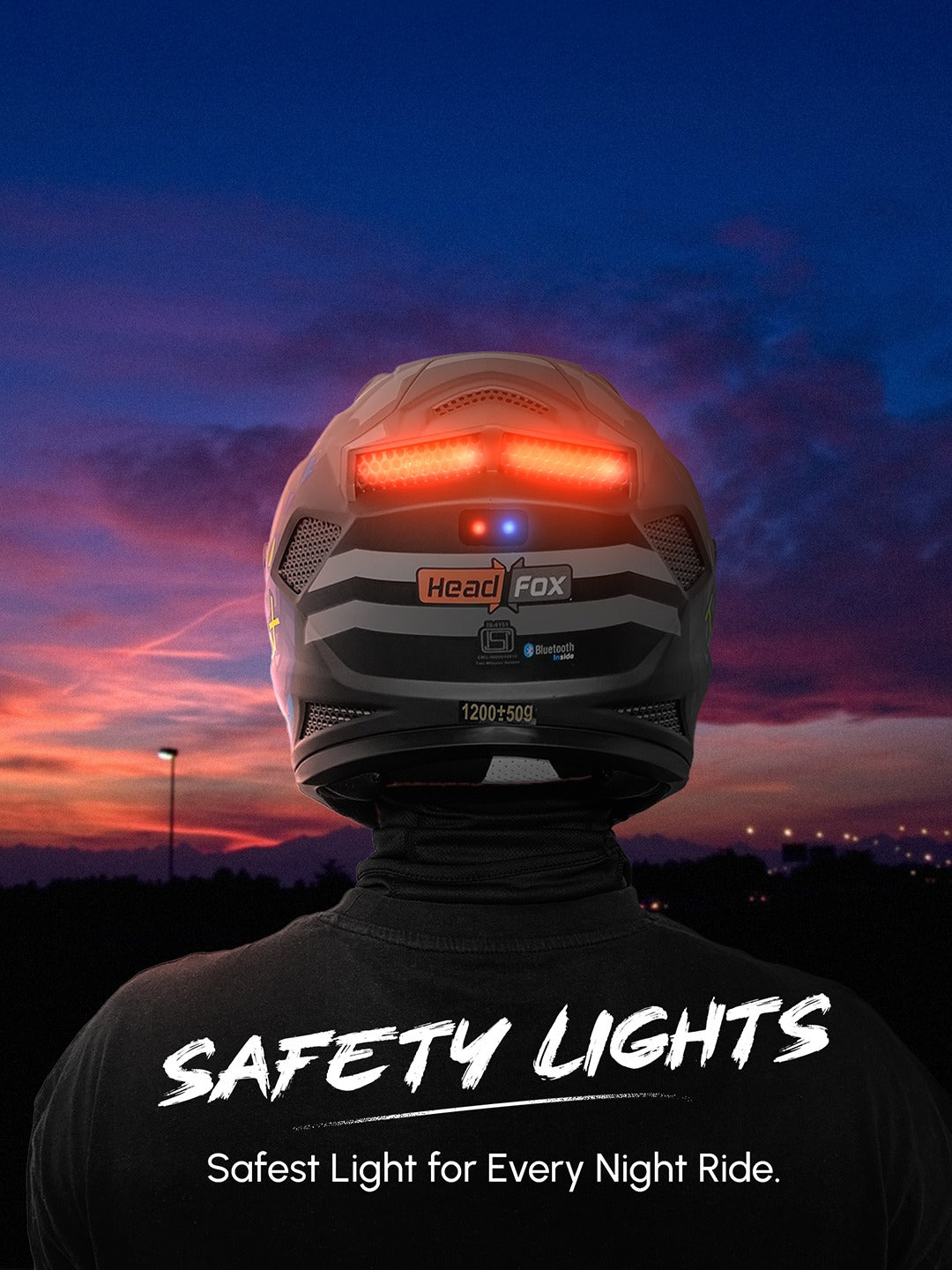
Beacon lights inspired by aircraft. A four-mode rear lighting system built for visibility and something more — a bit of identity and unity among riders, since every mode says something different about how you're riding and who you're riding with.
A brain that listens back. Environment Noise Cancellation for clear calls even with wind and engine noise around you, a voice assistant that answers to "call dad" or "play my Spotify," and auto-call answering that remembers your preference every time you power back on.
That's not a list of gimmicks bolted onto a shell. That's a helmet that's actually been designed, not just molded.
The Numbers Behind the Confidence
If you're the type who wants proof, not just promises, here's what's actually inside:
Bluetooth 5.3, connecting reliably within about 10m/33ft
100 hours playback time, and 600 hours standby — so it's not begging for a charge every other ride
Full charge in 2.5 hours over Type-C, LED glowing red while charging and turning blue once it's done
2400 mAh battery doing all the work behind the scenes
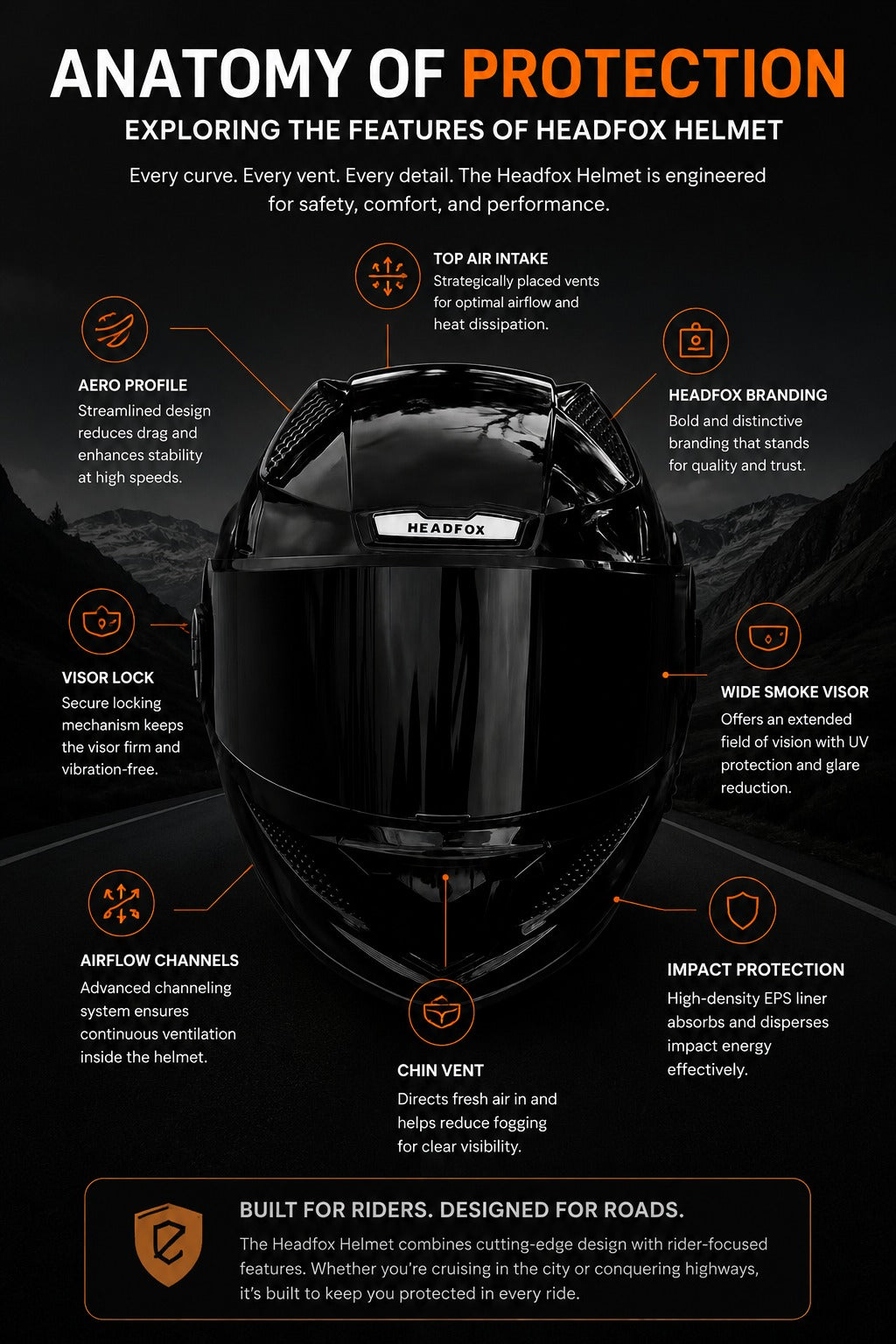
DOT and ISI certified, full-face protection in durable ABS shell — so nothing here compromises on the one job a helmet was always meant to do
Rainproof, at 1400g (+50g) — light enough to forget it's even doing this much
Quick-release locking, because good gear shouldn't fight you when you're in a hurry
Why This Actually Matters to You
It's easy to read a spec sheet and shrug. So here's what it actually feels like on the road.
You're heard, not just protected. Full tracks, calls, and voice commands without a single earbud fighting your padding.
You're seen, way before you used to be. Aircraft-style beacon lighting isn't decoration — on a dim highway or a foggy morning, it's the extra half-second a driver needs to notice you.
You're not tethered to a charger. 100 hours of playback and 600 hours of standby means Tarmac keeps up with your riding, not the other way round.
You're not choosing between safety and personality anymore. DOT and ISI certification sit right alongside bass drivers and mood lighting — protection and character, finally in the same helmet.
You're not settling. For years "safe" and "boring" felt like the same box. Tarmac is proof they never had to be.
The Bigger Picture
Helmets protect your head — that's non-negotiable, that's always been the job. But Tarmac is quietly expanding what a helmet is even allowed to be. It's not asking you to choose between safety and personality, or between protection and enjoying your ride. It's handing you both, backed by real certifications and real battery numbers, not just marketing language.
Decades of "same old helmet" might finally be behind us. Tech found its way into the one part of riding gear that stayed untouched the longest — and it landed there in a way that actually makes sense for the person wearing it.
The new age of helmets isn't a distant promise anymore.
It's here. And it's called Tarmac.


